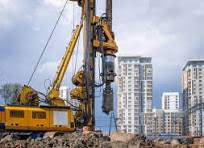
What is a crane operator?
A crane operator uses a crane to lift, move and position loads and construction materials. The work also involves planning lifts, completing operational checks, following load charts and communicating with the lifting team.
Crane operators often work closely with people carrying out dogging, particularly when loads need to be slung or directed from outside the operator’s view.
Cranes come in many types, makes and models, including:
- Tower cranes
- Self-erecting tower cranes
- Vehicle loading cranes
- Slewing mobile cranes
- Truck-mounted cranes
- Rough-terrain cranes
- All-terrain cranes
- Crawler cranes
- Non-slewing mobile cranes, including Franna-type cranes
- Bridge and gantry cranes
Which crane licence do you need?
The crane licence you need is determined by the crane you’re operating and, for slewing mobile cranes, its maximum rated capacity. It isn’t based only on the weight of the load being lifted on a particular job.
| Licence class | What it covers | Where you may encounter it |
| CT – Tower Crane | Tower crane operation | Fixed tower cranes commonly used on multi-storey construction projects |
| C2 | Slewing mobile cranes up to 20 tonnes | Smaller mobile slewing cranes and lifting work within the class capacity |
| C6 | Slewing mobile cranes up to 60 tonnes | Mobile crane work on construction, civil and infrastructure sites |
| C1 | Slewing mobile cranes up to 100 tonnes | Larger mobile cranes used for heavier lifts and larger projects |
| C0 | Slewing mobile cranes over 100 tonnes/open class | Heavy mobile crane work where the crane’s rated capacity exceeds 100 tonnes |
| CN | Non-slewing mobile cranes over 3 tonnes | Pick-and-carry and Franna-type crane work where the boom does not slew |
| CV | Vehicle loading cranes | Vehicle-mounted crane work used to load, unload and position materials |
CTI also offers Self-Erecting Tower Crane (CS), Bridge and Gantry Crane (CB), Derrick Crane (CD) and Portal Boom Crane (CP) training.
If you’re unsure which crane ticket applies, check the crane’s type and rated capacity before booking. Enquire now and tell CTI what equipment you’ll be operating and the work you need to perform.
Why do a crane operator course?
A High Risk Work licence is required to operate crane classes prescribed by WorkSafe Victoria. To apply for a new licence class, you first need to complete the relevant training through a Registered Training Organisation and pass the required assessment.
The course prepares you for both the practical side of crane operation and the knowledge needed to work safely around loads, lifting equipment and other people on site.
Successfully completing the training does not itself issue your High Risk Work licence. After passing the applicable assessment, you need to complete the WorkSafe Victoria licence application process.
For employers and people responsible for a worksite, training is also part of making sure workers have the skills and information required for the crane operations they perform.
What happens during crane operator training?
Most CTI crane licence courses run for 4 days at 8 hours per day, combining theory, practical crane operation and assessment. Course structure can differ slightly between licence classes.
For courses such as C6 and CN, the current program typically uses Days 1–2 for Unit of Competency training and assessment, followed by High Risk Work licence assessment across Days 3–4. Tower Crane and Vehicle Loading Crane courses generally place Unit of Competency training and assessment across the first 3 days, with the High Risk Work licence assessment on Day 4.
You’ll work through areas such as:
- Job and site planning
- Safe work method statements (SWMS)
- Pre-operational and operational checks
- Crane and lifting-equipment inspections
- Crane set-up
- Load charts and calculations
- Communication and signals
- Crane operation and transferring loads
- Shutting down and securing the crane
CTI has equipment at its Riddells Creek facility for its on-site crane training. Derrick Crane and Portal Boom Crane training may be delivered off site where suitable equipment and site conditions are required.
You will need suitable Personal Protective Equipment (PPE) for practical training. Crane courses continue in normal wet-weather conditions where it is safe and practical to do so, with appropriate protective clothing and breaks where conditions require them.
Assessment and what you receive
Assessment includes both knowledge and practical components. Depending on the licence class, this can include written questions, calculations, case studies and practical demonstrations using the crane.
Once you have successfully completed the course, met the training requirements and paid the applicable course fees, CTI can issue a Statement of Attainment.
The High Risk Work licence itself is issued by WorkSafe Victoria. After passing the assessment, you will receive an Assessment Number by email or a written Notice of Assessment and must lodge your licence application within 60 calendar days.
Approved online applicants can access their digital licence through myWorkSafe once the application has been approved. WorkSafe currently advises that a plastic licence card will arrive by mail within 20–25 business days after online approval.
How much does a crane licence cost?
Crane licence cost depends on the licence class and whether you’re eligible for government-funded training.
CPCCLTC4001 Licence to Operate a Tower Crane
- Full fee: $2,600
Funding available
This training is delivered with Victorian and Commonwealth Government funding through Skills First (Skill Set code CONISS011). Speak to CTI to check whether you are eligible.
- Funded cost: $1,600
- Funded concession: $320
People with a disability are encouraged to enrol.
TLILIC0023 Licence to Operate a Slewing Mobile Crane up to 60 tonnes
- Full fee: $2,600
Funding available
This training is delivered with Victorian and Commonwealth Government funding through Skills First (Skill Set code CONISS019). Speak to CTI to check whether you are eligible.
- Funded cost: $1,700
- Funded concession: $340
People with a disability are encouraged to enrol.
Other crane courses have their own fees, so check the individual course page or course calendar before booking.
The course fee and WorkSafe licence application fee are separate. WorkSafe Victoria currently charges $77.70 per High Risk Work licence class.
Crane operator pay and career prospects in Melbourne
Crane operator pay varies considerably with experience, licence class, industry, hours, overtime and the type of project you’re working on.
Jobs and Skills Australia reports median full-time earnings of $3,411 per week before tax for Crane, Hoist and Lift Operators nationally, based on May 2025 earnings data. Average full-time hours for the occupation are 50 hours per week. That weekly figure is equivalent to about $177,000 a year if the same earnings were received across 52 weeks, but it should not be treated as a guaranteed Melbourne crane operator salary.
The broader employment outlook for construction in Victoria is strong. The Victorian Skills Plan expects around 64,500 new workers to be needed in construction between 2025 and 2028, with building, transport, health and other major projects contributing to demand. That figure covers the whole construction workforce rather than crane operators alone.
For crane operators, career progression can involve gaining experience on different plant, adding crane licence classes as the work requires them and moving into larger-capacity crane operation. A mobile crane pathway might progress from C2 to C6, C1 and eventually C0, although the appropriate route depends on your experience, employer and the equipment you need to operate.
Experienced workers may also build related skills in dogging, rigging, lift planning and crane supervision.